Showing posts with label End Slavery. Show all posts

Saturday, June 6, 2015

#FoodPorn

I remember when I first started using hashtags…

I was very unfamiliar with how they worked and thought the idea of putting a random “#” in front of a word or phrase was just plain silly. 
#Blessed 
#Car
#Cookie
#LifeGoals
Like, really? Why is this a thing? 
To showcase my dislike (and complete ignorance) I would put long, ridiculous hashtags on EVERYTHING! A favourite of mine was #RealLifeHungerGames in which friends and I would discuss topics and how they relate back to one of our favourite book series. This hashtag was used during text conversations, gmail chat sessions when we should have been working, lengthy emails, and, of course, real life conversations (because who doesn’t let a few “hashtag, basic white girl” or “hashtag, P-T-L” phrases slip out of their mouth every now and then).

As hashtags became more popular (and as I figured out their real purpose and began to understand their significance) I became intrigued with the hashtags people were choosing to use. I found myself both using hashtags when posting photos of my baking adventures on Instagram, and searching hashtags as I would browse social media. Since I was frequently looking up baking related hashtags it was inevitable I would stumble across the raunchy and distasteful #FoodPorn.


#FoodPorn, the second highest search
related to food.
Why, internet?!
This does not make sense! Why are glamorous and enticing images of food being categorized as equal to an industry that ruins the lives of everyone it touches? Is it some kind of metaphor—like the detrimental state of your health after over indulging in sweets (or too much cheesy goodness, or too much carb-filled deliciousness) will actually ruin you and make you suffer? Is it attempting to illustrate how our gluttonous lifestyle can seem ok at first, but then breaks you down the way porn wrecks everyone it collides with? Those are the only connections that actually make sense in my head, but we all know the real reason the general public has chosen to associate #FoodPorn with delicious looking items— It’s not as a warning but as encouragement of the ecstasy which comes from experiencing something almost too good to be true, something you know you shouldn’t.

There are many reasons this hashtag bothers me. One of the biggest reasons is the connection between pornography and human trafficking. The below video really nudged me forward into creating this post. Please watch it-- trust me, it’s worth it.


In my research on how the porn and human trafficking industries are connected, one of the most disgusting quotes I came across is as follows:

"Amateurs come across better on screen. Our customers feel that. Especially by women you can see it. They still feel strong pain." - Carlo Scalisi, Owner of 21 Sexury Video

They still feel strong pain. Why is this ok? Why is this something the general public is ok with watching while ignoring the deeper issues involved in the production of the film?

While researching, the below facts and quotes about the porn industry really stood out to me. Reading these insights, while thinking back to how we associate hashtags like #FoodPorn to mean something amazing, really makes me question the validity and general social acceptance of the hashtag-- and why more people aren't outraged at how porn in it's delusional definition has become so common place.
  1. 88% of scenes in porn films contain acts of physical aggression, and 49% of scenes contain verbal aggression.
  2. A 2005 study claimed that pornographers were travelling to poorer countries where they could use and exploit women and children with fewer risks. Budapest, Hungary was cited as Europe’s capital for the production of porn films because, as one pornography executive put it, Eastern European actors ‘cost less and do more’.
  3. “The Department of Justice and the National Center for Missing and Exploited Children both recognize that pornography is an element that adds to the serious problem of sex trafficking. Many traffickers are found with filming equipment and cameras to create and sell pornography”
  4. "[Performers] usually ‘consent’ to the acts only in the degraded and demented sense of the word (common also to the law of rape) in which a person who despairs at stopping what is happening, sees no escape,… is often trying to avoid being beaten or killed, is always economically desperate, acquiesces in being sexually abused for payment, even if, in most instances, it is payment to someone else.”
I’d share more of these horrific tidbits with you, but just reading the quotes from those formerly involved in the pornography industry, and the plain facts my mind doesn't want to accept as true, make my stomach turn and my heart ache. Just watching the documentary "Hot Girls Wanted" on Netflix showcases how demented the pornography industry is-- how those involved feel they don't have control over the situations, how many have been taken advantage of in their past leading them to choose this lifestyle, and how degrading it is to the women involved. Pile on top of that the insane situations or 'fantasies' these people are 'acting' out for the viewers-- I just can't handle it. 

While the above information is great to share to educate how pornography negatively affects the individuals involved, those trafficked into the situations, and those who choose to view porn, why has there been no research done on the connection between the various forms of ‘porn’ society has become numbed to viewing on social media (#FoodPorn #HousePorn, #CarPorn, etc)? I’ve attempted to research the connection, knowing it would present a great viewpoint for this post, and the only information I can find is how #FoodPorn can lead you to make bad choices regarding your own dietary needs… Surprised? Me neither.

One of the most unsettling things about all this is seeing peers in the anti-human trafficking space use the hashtag. What message does this send about our commitment to seeing exploitation come to an end? It’s definitely not a good one.

I’d like you to take a bit of time and read through some of the sources and resources available at the end of this post. Educate yourself on what is really happening in the porn industry and know that any reference society can get away with only encourages the pornography industry to continue what they are doing—exploiting individuals for the viewing pleasure of those whose lives will subsequently be ravaged. It’s an endless cycle and we don’t need things like #FoodPorn to become so common place that porn itself, without a pre-cursor word, becomes accepted until it’s too late—the moment the downward-spiral entangles friends, family and those closest to you.

------------------------------------------------------------------------
Sources and resources:
Hot GirlsWanted—Documentary available on Netflix
XXX Church

**Note, as a blog, this is purely my opinion and a presentation of facts. I understand that as pornography becomes more main stream in our culture, my views can be considered 'old school' or 'close minded'. I know magazines and websites promote pornography as a way to have a healthy and happy sex-life, I know pornography is promoted in innocent ways, but the facts I've been presented with portray the realistic, behind-the-scenes portion of the industry many people either don't know or choose to ignore. Let us not turn a blind eye to real issues affecting the people around us.
  

Thursday, March 13, 2014

Why I Don't Shop At Forever 21

Note: This has been a hard post to both write and publish. While in Dominican Republic over the summer working with Canadian volunteers, eyeing up outfits on Pinterest, or asking friends where they bought the adorable ensemble they happen to be wearing, Forever 21 seems to always be the answer. It’s hard to respond when that is what I hear—I don’t bust out a ‘don’t shop there’ speech that may come across judgmental and negative… I tend to respond with the emotionally non-descriptive ‘cool’. These are my thoughts and I hope you enjoy reading them! As always, I encourage you to make your own decisions when you choose whom to support with your hard-earned dollars!

Oh Forever 21. Your combination of trendy, absolutely adorable and cheaply priced clothing means you have dominated the cash flow from the minimum wage, part-time paycheque of most teenagers since you invaded the shopping scene. It’s these same reasons you monopolize the closets of 20-somethings to 50-somethings that find your massive quantities and varieties fitting for any occasion. While finding clothing that is both trendy and affordable can be likened to finding a needle in a haystack, I can’t bring myself to shop at your stores.

Forever 21 had been a place of confusion for me over the past year or so. As a company with owners who have strong Christian values, even having scripture references on the bottom of their shopping bags, I couldn’t help but be confused by the company’s lack of ownership to the sources of their fast-fashion clothing.

Phew, made it through a tricky, sticky, awkward statement involving faith, business, and where my concerns fit in without making any harsh statements!

Does the fact the company was created, and is run, by owners who are believers of God change the immediate issue of the company lacking transparency? No—a company owned by anyone else would still receive my un-approving reaction and choice to not support them demonstrated by no longer purchasing any of their retail goods.

What does change is, as an individual of faith myself; I find faith as the first and base reason to willingly care about supply chains, ethics, transparency, and ensuring fairness for those involved in the process of where clothing is made.

It seems like two conflicting interests rolled into one—a business with owners who do missions work, take trips to help people in crisis, invest in creating a better world, but currently do not do so with their biggest legacy and asset they created and have taken the world by storm with. On the CSR (Corporate Social Responsibility) page of the Forever 21 website they note the charity work they, as a company, contribute to. Forever 21 raises funds to donate to charity by selling items that are part of its ‘Love To Give, Give To Love’ collection. It is wonderful to see, and most clothing companies donate to charity. Any company that makes large sums of money will often ‘give back’ which helps make consumers feel good about using their dollars as their vote of support.

I read a 2012 interview on CNN with Do Won (Don) Chang, founder and CEO of Forever 21, for Talk Asia in which he discusses his missions work, faith and the often controversial John3:16 on the bottom of the shopping bag. He says, when it comes to the verse on the bag, 
“I want to ask you whether you have read that verse? It shows us how much God loves us. The love he gave us, by giving us his only son, Jesus, was so unbelievable to me. I hoped others would learn of God's love. So that's why I put it there.”
He goes on to state, as the family does in most interviews, that it’s a statement of personal faith and doesn’t represent the beliefs of the entire company.

When Mr. Chang was asked about his time spent travelling ‘helping out’, he mentions his work when Japan was hit with earthquakes, working in the Philippines and also time in Pakistan when there was flooding. His more in-depth answer comes when speaking on handing out corn in North Korea and states that going and visiting in person, spending time with them [the individuals in the villages in North Korea], is even more important than just donations.

And no interview with the man behind Forever 21 would be complete without referencing lawsuits on workers rights in factories that Forever 21 sources clothing from. Mr. Chang’s statement… “Regarding that problem, those are actually not my employees. Those are people who work at a company that sells products to us. With companies that we just buy and trade with, we try to check up on their working conditions and try to prevent any problems…”

The biggest shocker to me, in all my research regarding Forever 21, was the one time Mrs. Chang took the stand in a court case. Taken from Bloomberg Business Week is the following from an article titled “Forever21’s Fast (and Loose) Fashion Empire”. To give you a bit of a ‘101 lesson’ reference before the quote: The $175,400 settlement was in a court case involving garment workers who worked in sweat-shop like conditions right in LA making garments for Forever 21. To top it off, a documentary was shot about the entire situation titled “Made In LA

“Her testimony was revealing beyond her apparent ignorance of Forever 21's operations…. Lawyers had turned up documents showing that one of the company's biggest suppliers, One Clothing, is owned by Mr. Chang's private investment firm, Too Capital. It was also the supplier that reached the $175,400 settlement with the garment workers in 2004... On the witness stand, Mrs. Chang said she knew nothing about the operations of either One Clothing or Too Capital. "We simply trust the vendors, and then they manufacture the garment for us....That's about it," she said.”
To put this into more plain terms, one of Forever 21’s biggest suppliers is a company owned by Mr. Chang’s private investment firm. Trying to prevent problems can come in many forms—from transparency, traceability, factory audits and personally visiting and ensuring codes are kept. Safe to say, just ‘trusting’ a company is idealistic, but certainly not realistic in the fashion industry.

To put this all simply from the factual side, let’s take a look at Free2Work. The Forever 21 Free2Work Score Card and Apparel Industry Trends report are where I found my initial information and served as the foundation of my research.


 As we can see, Forever 21 receives an overall D- grade based on Free2Works checklist and ranking system. In the Worker Rights category they are ‘all in the red’ and even receive an overall F. Any company who wants me to purchase their clothes needs to show they are at least trying to make an effort to do something that will improve the conditions of those who create what they sell.

From a faith-based perspective, we are called to seek justice and help those who need it. I would like to see the Chang’s reach out and go to the homes of those who work in the factories both overseas and in LA that produce their clothing. I’m sure they would be shocked the very people making the clothes they sell in their mega-huge, over the top stores could more than likely be the very people they often seek out on missions trips to be with and offer help to.

Why is there disconnect?
I don’t know. 
It can’t be a lack of education— I feel as though their countless lawsuits would provide you the education you need pretty fast! 
Is it a lack of faith?-- A lack of allowing the idea of ‘practicing what you preach’ to seep into your work life? Mr. Chang has made it clear he separates religion from work in interviews. Perhaps there should be some cross over. Perhaps workers would be treated fairly and we would see a shift from trendy clothes at rock-bottom prices to trendy clothes where a few more dollars through the process means people’s lives are positively influenced. Compassion is in fashion, being a conscious consumer is the best accessory you can wear—I’m quite surprised Forever 21 hasn’t jumped on the trend yet.

If you want to read more articles on why individuals passionate about justice choose to no longer support Forever 21 with their purchasing power check out the following articles!
Awakened Aesthetic - Exposed: Forever 21 
Let's Be Fair - Let’s Trade: Forever 21 
Una Luna Mag - How To Quit Forever 21 

Tuesday, February 11, 2014

Challenge: Ethical Valentine's Day

The mystery surrounding who Saint Valentine really was is quite fitting to the often-mysterious image surrounding the idea of love. Most stories peg Saint Valentine as a man who either secretly married Christian couples at a time when Christians were being persecuted and were unable to do so, or, he secretly married couples so the husband wouldn’t have to go off to war. Most of these stories of individuals secretly pledging their undying love end with Saint Valentine landing himself in jail. The only bit of information that seems known is Saint Valentine died on the date we know as Valentine's Day, February 14th.

The mystery surrounding Saint Valentine and the way we celebrate a holiday with little knowledge of it, bear shocking similarities to how we celebrate the holiday with chocolate, sweets, flowers and cheaply made themed goods. The mystery of how chocolate is harvested and made is a mystery to most of us; how flowers can be fresh and alive year round and available especially at grocery stores at such low prices is a riddle we often cannot answer; and that generic gold heart necklace is made by who? is quite the conundrum. Instead of finding out the truth we often just buy the items in the prettiest package to give to the person we deem valuable enough to bestow the over-the-top love themed goodies to on Valentines Day.

The tricky part about Valentines day is it’s not a holiday you find really necessary to celebrate (like preceding Christmas and approaching Easter), yet so many people are caught up in the adorableness of red and pink hearts, sparkles, and mini-everything including animals with cute sayings on cards that make you just want to go “awweeeheeee!”. People indulge in special menus at restaurants priced higher than normal, establishments who normally don’t cater specifically to couples are suddenly hosting events and every store is encouraging you to spoil that ‘special someone’ with whatever items they happen to be in the market to sell.

We can get caught in the middle of this awkward area not really knowing what to do and often end up grabbing something last minute because we suddenly feel the need to participate. When that happens we are ill prepared to make ethical choices and end up feeling bad for two reasons:
Reason #1:  Did we really just walk into our local grocery store or super centre and pick up a miniature stuffed bear/kitten/puppy/gorilla/sloth/fish that sings “My Heart Will Go On” with a heart shaped box of chocolates strapped to its chest with the sentiment ‘Be My Valentine’ on it?
Reason #2: We have no idea where anything actually came from—is that chocolate good to be eating, both for the waistline and the ethics of the person I bought it for? I just found out a few paragraphs ago that I can’t even trust flowers! Gold and diamonds are that expensive and there is still slavery?

We know the facts...
  • There are between 27 and 30 million people in slavery today.
  • 78% of victims involved in slavery are in Labor Slavery.*
  • One in six children 5 to 14 years old — about 16 percent of all children in this age group — is involved in child labor in developing countries.*
  • In the least developed countries, 30 percent of all children are engaged in child labor.*
  • Worldwide, 126 million children work in hazardous conditions, often enduring beatings, humiliation and sexual violence by their employers.*
  • An estimated 1.2 million children — both boys and girls — are trafficked each year into exploitative work in agriculture, mining, factories, armed conflict or commercial sex work.*
  • The highest proportion of child laborers is in sub-Saharan Africa, where 26 percent of children (49 million) are involved in work.
  • A million diamond diggers in Africa earn less than a dollar a day.**
  • 60% of all flowers sold in the U.S. come from Colombia, the second largest flower exporter in the world. The majority of Colombian flower workers receive around $8 a day, which is not enough to cover the cost of a family's most basic requirements.***
  • 66% of these workers experience health problems associated with the chemicals involved in their work.***
  • An ILO Survey conducted in 2000 estimates that 20% of Ecuadors 60,000 flower workers are children. Many of those between the ages of 14 and 18 work in the industry instead of attending school.***

...And we also know that being prepared is the key to success!
And yes, even though Valentines Day is right around the corner *cough-afewdaysaway-cough* you can still take a smidge of time right now to be prepared!

Tip #1: Research.
When researching for these Ethical Challenge posts I find I often come across the same information. However, this year a new website popped up and I couldn’t help but be pleased to see it! World Vision’s No Child For Sale campaign has a site called GoodChocolateGuide.ca. On this site they list brands of chocolate that are fair trade or have other certifications that make it ethical. Finding this website is like striking gold. So often people have no idea what to buy or where to buy it. This website does both! Upon investigating the chocolate options they present, I’ve found a few that I am 100% sold on and am looking forward to tasting (or tasting again… like Giddy Yo-Yo).
I also found an awesome article titled 'Valentine's Day Gifts That Aren't Evil'. This short and sweet piece provides background information on the forms of slavery found in Diamonds, Flowers and Chocolate, and provides ethical alternatives! 

Tip #2: Wait… do you really want to buy your significant other chocolate?
Take a brief moment and decide if you want your significant other to receive chocolate from you as a gift? Chocolate may be the generic ‘go-to’ gift but if your lady or man of choice is say, trying to stay off sugar after the holiday season or is trying to get in shape before your upcoming getaway in the sunshine, perhaps sugar isn’t the best option…. Just sayin'...
Tip #3: Love Local
After you complete your research on companies you want to support, and have an idea of what your love may want, find a local place to get it. Also take a moment to research if any local companies are featuring enchanting options for your sweetheart! Shoot out some emails to Bakeries or Chocolatiers in your area—what kind of cocoa do they use and are they offering anything special? I work at a bakery that provides chocolate goodies that are hand-crafted with organic, fair-trade ingredients! To top off their awesomeness, they even partnered with two other local businesses to offer Valentines packages!
Tip #4: Send with Love!
You have an ethically sourced gift of perhaps chocolate and flowers and kisses and teddy bears and generic all-out, full-fledged love! Now be a dear and send it with love! Add a cute card, draw a heart on a piece of paper and write I love you, or add a bow you found in a non-frequented corner of your current place of residence left-over from Christmas.

As the debate to celebrate or not celebrate Valentine's day continues, remember, you shouldn't wait for an occasion to tell that special someone how much they mean to you. The kind words you share only during special moments should be spoken often. Love that has sparked in you a fire of passion, commitment, and daily gratitude of being with an individual who always attempts to understand you, continually enjoys spending time with you, and is blessed enough to share with you the joy of life's adventures deserves to be celebrated every day.

Image found on Pinterest.


* Information from Compassion 
** Information from Brilliant Earth
*** Information from Free2Work 

Tuesday, January 21, 2014

Human Trafficking Prevention

Image found on Pinterest
I’ve heard January be referred to as Human Trafficking Awareness month.
As the beginning of research generally starts, I opened up Google and typed in ‘Human Trafficking Awareness Month.’ Upon skimming through the top few headlines one link in particular caught my eye. Posted by the White House, it was a letter that President Obama wrote announcing January 2014 to be National Slavery and Human Trafficking Prevention Month.

Every part of me was filled with excitement.
This is exactly what we need.
Awareness is one thing, and a good thing, but prevention is where we should be focused after awareness has been reached. Once you are aware, there needs to be another step involved-- something practical and tangible and that, my friends, is Prevention.

I know, I know. You might be thinking ‘How can I prevent slavery?’
You may not be actively involved in the sex trade, which is where most of the attention on human trafficking tends to go, so you don’t think you are involved and actively growing the 2nd largest criminal industry in the world. Think about it, if human trafficking and modern-day slavery were only about sex, would it be the fastest growing criminal industry in the world? While some may answer yes, I would guess probably not.

Human Trafficking and Slavery exists in every area of our lives—from the clothes we wear, to the food we eat, to the electronics we use. What we use for entertainment and enjoyment, someone is paying the ultimate price with their life for its creation—and often we don’t think about it.

If you read my blog, you’re probably already aware. I’ve written numerous posts regarding human trafficking and modern day slavery; I documented my time in Thailand working in a Children’s Home with those who have been either exploited or at risk for exploitation, I’ve written about my life changing experience with Not For Sale, I’ve challenged you to end slavery in your life by participating in ethical holidays and being a conscious consumer. Awareness is all around us—from activists to slacktivists, organizations like IJM, Not For Sale, Love 146 and World Vision and even campaigns like MTV Exit and the A21 Campaign.

Time for prevention.

As I was reading Mr. Obama’s letter, I fell in love with this paragraph that is a call to both action and duty.

“As we work to dismantle trafficking networks and help survivors rebuild their lives, we must also address the underlying forces that push so many into bondage. We must develop economies that create legitimate jobs, build a global sense of justice that says no child should ever be exploited, and empower our daughters and sons with the same chances to pursue their dreams. This month, I call on every nation, every community, and every individual to fight human trafficking wherever it exists. Let us declare as one that slavery has no place in our world, and let us finally restore to all people the most basic rights of freedom, dignity, and justice.”

That is prevention—changing the way we have lived our lives up until this point. Ethical business practices, a sense of world community, knowing the basic rights of freedom, dignity and justice are the foundation for a world that can thrive.

Below are what I think of when I contemplate prevention and steps we can take, as every day individuals who understand the value of the human life, to no longer see any more innocent victims to something that is preventable.

1 – Make sure you know the facts
Awareness is the first step to prevention. Do you know what human trafficking is? When someone asks do you find yourself stumbling upon what the exact definition is? Spreading basic awareness is as simple as knowing the definition and having some examples of what it is.
Image taken from Not For Sale

2 – Educate yourself on your personal contribution to the continuation of modern-day slavery.
Take just one hour out of your day and search out information on the companies of the clothing you happen to be wearing. Free2Work is a great place to learn about companies. Think of what you are planning on eating for dinner—research what kind of slavery exists in the growing, harvesting and production of what you are planning to eat. Did you know people work in factories peeling shrimp? There are documented cases of exploitation (unfair wages and working conditions to name two of the issues) to those workers peeling shrimp. Are you using a laptop to do your research? Labor issues around Apple have been documented and are easy to find upon doing a google search. And check out Slavery Footprint to see a rough estimate of how many slaves are working for you.  This isn’t meant to make you feel bad—but to make you aware of your personal contribution.

Screen Shot from the Slavery Footprint Questionnaire

There are 30 slaves working for me-- my personal Slavery Footprint results!

3 – Research alternatives to your current lifestyle contributions.
Instead of shopping at Forever 21, shop at H&M. Buy second hand clothing where the money goes to a charity instead of the company who originally made the garment. Instead of buying chocolate from Hershey or Nestle, buy from Divine or AlterEco. Try to buy locally made products (even if they are a little more pricey). While it may be impossible to cut out slavery from your entire life, your purchasing power says a lot and changing a few basic parts of your shopping habits can make a difference in the long run. Check out Free2Work.org for company ratings to see how your favourite brands compare to others.

4 – Be the change.
Ethical leaders are needed for real change to happen. Planning on starting a business? Do it right from the start. Be a person who is committed, in whatever they set out to do, to do it in such a way that doesn’t allow the exploitation of some for the your own personal gain. Find out you’re surprisingly passionate about the cause? Start a blog, share your story of justice-seeking, speak to others. Combine your current passions with a goal to end slavery.

David Batstone, founder of Not For Sale, posted a quote on his Twitter feed that was retweeted by MTV Exit where I happened to stumble upon it. It goes like this:


I encourage you, not only during Human Trafficking Awareness and Prevention Month but also throughout the year, to do just that-- change your view of slavery where your current life finds you and design creative ways to come against it. Be pro-love  and be the change that is needed to end modern-day slavery.


What are some creative ways you have found to raise awareness or prevent human trafficking?

Wednesday, March 13, 2013

Challenge: Ethical Easter


"Hundreds of thousands of children labour in the West Coast of Africa to produce cocoa, the main ingredient in chocolate. Specifically, over 40% of the global supply originates in the Ivory Coast, where the US Department of State reports that over 109,000 children work under the worst forms of child labour. Of these 10,000 are victims of human trafficking or enslavement. Children working in cocoa production labour long hours and are often required to use dangerous tools. They are frequently exposed to toxic pesticides in the fields that create health issues and are forced to walk long distances in extreme heat. Furthermore, because these children work long hours they are denied access to an education." -- From Free2Work.org

I'd like to propose a challenge.
As with all challenges, this will not be the easiest thing you have ever done.
It will require thought, effort, will power and commitment.
It will require you to go beyond the social norm, break free of traditions you may have set in place, and step into a world where you not only care about your friends, family and taste buds, but care about the world, and the people in it, who contribute to the most consumed item this Easter... chocolate.

You may think the paragraph above is slightly dramatic-- I understand. How often is chocolate "the bad guy" to anyone except individuals watching their waistline and those who can't consume for health reasons? We so thoughtlessly consume chocolate with perhaps our only thoughts being
a) How many calories?
b) What is the price?

This Easter you will challenge that thinking.
You will make a stand for the rights of human beings around the globe in going above the cute packaging, the clever marketing, and adorable eggs & bunnies that overtake your senses in stores and will commit to purchasing ethically made chocolate and candy.

Perhaps you are thinking "Sweet! This will be easy!"
I applaud your optimism!

When walking through Walmart, Superstore, Shoppers Drugmart and other chain stores, you are provided with many chocolate options. Everything you could desire! Enjoy the gooey centres of the Chocolate Creme Eggs? You can have them-- and even enjoy the same gooey-ness in the form of a Caramilk Egg and even enjoy the bitter sweet dark chocolate in the same format. Do you prefer salty with your sweet? As consumers demand the sea salt & chocolate combo, companies respond and even seek to entice you with other options-- why not caramel with your chocolate and sea salt? Want to feel healthy eating your chocolate? How about a dark chocolate bar with fruit and nuts-- you can indulge your sweet tooth and while you'll still be indulging your figure, it won't be as bad as the milk chocolate, nugget and caramel king sized bar you could have picked up from right beside.

As you swim through an ocean of rich, milky, indulgences, do you see a Fair Trade option? And I mean a real fair trade option-- none of this Cadbury-providing-Dairymilk-as-their-ONLY-Fair-trade option? Do you see chocolate eggs in festive packing made by a company that is dedicated to caring about those that work to get the cocoa from the field to the production line? Chances are, in your average retail store in Canada, these particular items are not lining the shelves.

I've pretty much just dashed your dreams of going into Superstore or Walmart and purchasing everything you need for your Easter festivities and leaving with a clean conscious. I'm ok with the fact I just did that. I'm actually happy I did.

It's going to take time, effort, and research to find chocolate and candy options that care about those individuals making the treat first and profits second. You'll have to venture into stores you might not normally take a look in (Ten Thousand Villages or even some health food stores), you may have to do some pre-planning and order goodies online, and, as my hope is, you will realize how often we contribute to continuation and expansion of slavery around the world.

This brings us to the REAL challenge.

While the general idea behind the challenge is to have an Ethical Easter, I think the real challenge is accepting, acknowledging and allowing this challenge to resonate in your day-to-day life. Our day-to-day lives are tainted with slavery. Lately I have had the extreme privilege of seeing people all around me learn and take to heart this reality. I've been privileged to share some of my knowledge with them about slavery, human trafficking and the resources I find most valuable in being a conscious consumer. Lately one of the best feelings is where I'm having a conversation with someone, and they mention something to me about downloading the Free2Work App, or looking at the labels where their clothes are made and wondering about those who made them. These things bring great joy! I know seeds that have been planted are growing and soon enough these same people can be sharing this information with others. A movement is happening.

At Easter we reflect on the crucifixion and resurrection of Jesus Christ. He is our example of how to live, how to love, how to be. He came to Earth and shattered what the world believed as right and both preached and led by example how forgiveness conquers revenge, how we are to pray for those that persecute us, and how Love truly conquers all. Jesus was the original abolitionist-- teaching us to help the oppressed, care for the poor, the sick, the needy, the widow, the orphan, and to set the captives free. If we, as Christians-- followers of Jesus-- cannot find it in ourselves to daily, in the choices we make, live a life of justice for those have been silenced, then how are we living a life following his example?

As we celebrate the ultimate sacrifice God made out of His amazing, incredible, immeasurable Love for us, let the choices of what we use to celebrate reflect the lessons of Jesus' life on Earth-- Love, Justice and Freedom for all.

Image from TreeHugger's 10 Fair Trade, Organic, and
Vegan Sources for Easter Chocolate.

Here are some resources for you to use when it comes to purchasing ethical chocolate and candy this Easter season!
Free2Work (Can you tell I have worked with Not For Sale? Only my top recommendation every time!)
World Vision's Good Chocolate Guide
Slave Free Chocolate Table by Stop Chocolate Slavery
TreeHugger's 10 Fair Trade, Organic, and Vegan Sources for Easter Chocolate


FAQ's:
Will Fair Trade or Ethical chocolate be more expensive?
Yes, it will be. With good reason-- caring about everyone in the supply chain! From those farming to those working in the factories, the people in the supply chain are treated fairly. It's worth it to spend a little more to know that people are being treated right!

So the chocolate is more expensive which means I can't buy as much. What about the traditions of my friends/family/children/co-workers/neighbours/general human beings I am in contact with have? 
I understand that your family tradition is to hid a bazillion chocolate eggs all around the house and do a massive hunt on Easter Sunday. Traditions can be adjusted! Instead of hiding a bazillion eggs, hide clues that lead to a basket of treats! It's still a hunt and still awesome! Maybe you could splurge and hide a bazillion fair trade eggs!

How can I explain to my youth group/family/co-workers why they aren't receiving the generic chocolate they expect and love without making it seem like I am being a jerk?
No one wants to make someone feel bad. Explain to them that you have been learning about what happens with the production of chocolate and that you are using your purchasing power to make a difference. We've all been the person who had no idea this was happening. Take this opportunity to share with them the excitement you have about being a conscious consumer! Maybe you'll get them in on the movement! Even kids can find a connection. Does your kid love to go to school? Does your kid love to play sports, or dance, etc. Connecting the dots of "You get to do this but not all kids get to. Some kids have to work all day long." can make a huge impact!


How are you going to have an Ethical Easter?


Thursday, February 7, 2013

"Where am I supposed to buy clothes?"

I was recently on vacation with my family in Hawaii.
When I say family I mean my husband, mom, dad and two older brothers.
The last "family vacation" we took was when I was 16 years old to Disney World.
Needless to say, it was an interesting time to see how our personalities, interests and lifestyles meshed and, at times, didn't mesh.

I'm sure we can all agree that people are in a state of constant development. Consistently growing, changing, evolving into the product of their beliefs and surroundings. Every person in my family is very different. It was quite interesting for us be together for just over a week, and I am consistently grateful for my husband being there as someone I could escape the generic "family craziness" with.

While on this trip, you best believe my family is on the prowl for deals. You're on vacation-- you take in markets, touristy shops, and all the big shopping centres and outlet malls. As a girl on vacation, it's often essential to at least go into a store and see how expensive the high end brand names items are (Coach, Prada, Tiffany's, etc) and compare that with how reduced the prices are at the outlet malls.

But something else occurred.... I found myself standing up for the "over priced" products.

Now I'm not talking overpriced Prada and Gucci purses, or Armani suits, or Channel clothing. I'm talking about the $7.95 chocolate bar and the $24.00 bag of coffee.

These are the items we most often, without a doubt, consistently try to receive the best bargain on. When you go to the grocery store, when you hit up the dollar store, you are looking for the best deal on the little extras we casually supplement our lives (and even our waistlines) with. Should a chocolate bar be only $0.65 or should we be paying $7.95? When you consider the supply chain, $7.95 seems like a small amount to pay for fair wages & labour practices, codes of conduct, transparency, and a company that cares enough about the people making their product to treat them fairly-- from picking cocoa to getting it on the shelf. And while I can't say the company that produced these $7.95 chocolate bars are taking all the necessary precautions, it is a lot harder to imagine that the $0.65 you pay for a chocolate bar is providing even close to the same.

As I make mention of how I now choose to take my business from a clothing company that has a poor. or no, Free2Work rating to a company that does, I am being asked more and more "What is Free2Work?" and "Where am I supposed to buy my clothes?". People ask those questions sometimes in a mean way-- how you get offensive when you are being informed something you have always been doing is not seen as "right" by everyone around you.

Moments like this are a turning point.

You now have the opportunity to share with people about modern day slavery and how it's literally in the fabric of our clothes. It's an opportunity to plant a seed with them that their every day choices-- the bargain they hunt for, the deals the try so hard to find, are contributing to something they may not have even known existed. To put it simply, you could change someones life by sharing with them the choices you are making and the reasons why.


\When people ask where I shop, I love sharing with them the amazingness that is Free2Work and their most recent Apparel Industry Report | From Farm to Factory. Being with NFS at the time this was released and doing their social media posting was a blessing. While the report doesn't feature strictly Canadian brands, it highlights so many of the brands we all have access to (brands like H&M, American Eagle, Lacoste, Forever 21).


I encourage you to take a look through the report and do two things:
1) Put your new knowledge to action.
Be a more conscious consumer when shopping. The hardest thing can be applying the knowledge you have-- when you have a chocolate craving, buy the A or B rated brands, not the D or F rated. When you go shopping for clothes, buy items from stores with A or B ratings, not D's or F's.

2) Share your knowledge with others.
The more that people know they can make a difference when they are purchasing their wants and needs will hopefully result in more people making that difference and shopping smart.

When have you explained to someone why you are a conscious consumer? Has this inspired others to do the same?


Polices | Company Performance from the Apparel Industry Trends | From Farm to Factory Report


Saturday, February 2, 2013

I like Cats and Ending Slavery.

When you meet someone have you ever wondered why one of the first questions is often, “What do you do?”. Most of us answer with our occupation. My question is, why do we let our jobs define us? I have learned that your job does not define who you are. Your actions, your beliefs, your experiences – those things define who you are. I work in radio and in retail. If you ask me what I do, I'll answer with “I help change the world. I'm a humanitarian.”

When writing to friends and family to gather financial support for our second Hero Holiday to Dominican Republic in July of 2011, that blurb above was my opening paragraph. I thought it was pretty darn good. I was defying social norms and sharing a valuable lesson; your work does not define who you are. When I look back now, I realize I was also doing something else-- telling people who I am. For people I may not have kept in touch with after my move to Winkler, or for those who thought they knew who I was, I was re-defining their image of me in their mind. Regardless of what people knew, I was redefining myself as a humanitarian.

Defining who you are to people is an interesting thing-- from first impressions based solely on your looks to only having a brief conversation, or to generalized assumptions taken to the extreme because of one fact people learn, it's definitely something that has been of great interest to me lately.

One thing I have learned over time is that while you can choose what you put out there of yourself to show to the world, the world will attach itself to various things. These things might be exactly what you'd like them to be, and then again, they might attach themselves to things you don't necessarily agree with or place as much value on.

An example of the above, and in my opinion a perfect example, is my total of five months with Not For Sale. While there you live with people, start to work with them, and get to know them immediately. My time was spent focused on the professional, work aspect of the Fellowship. Keep in mind,  you are not only working with an entire staff and fellow fellows but also living with and literally 'doing life' with the other fellows. In these situations, and to a certain level, people can cling onto little facts that will show they know you (they listen to you, they are making an effort to become friends, etc). You may share a random fact or two and those facts become who you are...

For me in this situation the fact was that I like cats.
I have a cat at my parents house.
Her name is socks.
I think cats are cute, cuddly, and adorable.
You look at my Facebook wall from my time with NFS and...
IT'S ALL CATS.
CATS.
CATS.
CATS.

An example of a post on my Facebook wall.
And while that's not a bad thing, it is certainly something that I reacted to in a few various ways: I thought it was funny at times, some what annoying and even heartwarming.

How did these people pick this one random fact to be their main point of "knowing me"?

While living with these fine fellows there were other things that stood out to them; my love of baking, my inner grandma, the fact that I love Jesus. But the cat thing was unlike any other.

To this day I still receive pictures and other hilarious articles to do with Cats posted on my Facebook wall. I absolutely love it now. It is more heartwarming than ever, never annoying, and always funny. It's nice to know that while cats were the random point of connection then, to this day the picture of a too adorable cat reminds them of our time together, working to end slavery.

My life with cats and cupcakes with NFS.

What is it about you that others tend to cling to when they think of "knowing you?" What do you think of the connection between you and that one "random fact?" 

Sunday, August 5, 2012

Sunshine in Half Moon Bay

As I am typing this a few of us fellows are sitting in the living room, windows open, and are all busy on our laptops. While all doing various different things, one thing we all have in common is the fact that we are enjoying what is referred to as a "BSD". BSD, if you didn't know, stands for Blue Sky Day. It is something that doesn't happen very often here in Half Moon Bay and when it does, you need to take a few moments out of your day and enjoy it.

Enjoying the day and enjoying what we are doing here are two things that we do, however we don't do with enough intent and realization behind it...

The weeks are busy and I find myself doing so many things in one day that when it's time to submit my dashboard on a Sunday afternoon, I find myself surprised at all the things I did. The thought "I did all that this week?" often comes into my mind, thinking whatever the task was, I did it weeks ago. Things are fast paced and always changing and it's an environment I am adjusting to and beginning to love.

Laughter. As we all sit at our laptops, the random sheep in an unknown yard nearby yard starts to bleat. And not just a regular one, but a long, awkward sound.  We all look at each other and burst out laughing. Wonderful.
Back to being busy. When working with NFS, there's never a moment where you feel like you are done. I am all too familar with the "I've done all my work for the day and I still have a couple hours/all afternoon left to work!" feeling. This is simply incredible for me. My last job left me feeling quite bored and like I had so much left to offer at the end of the day. With the Fellowship, the end of the day comes and I am beat! I feel accomplished in the tasks I completed, excited about the work yet to be done, and satisfied knowing that there is always  more work to be done. We are ending modern-day slavery. Your work never ends at 5pm.


First bottles of REBBL


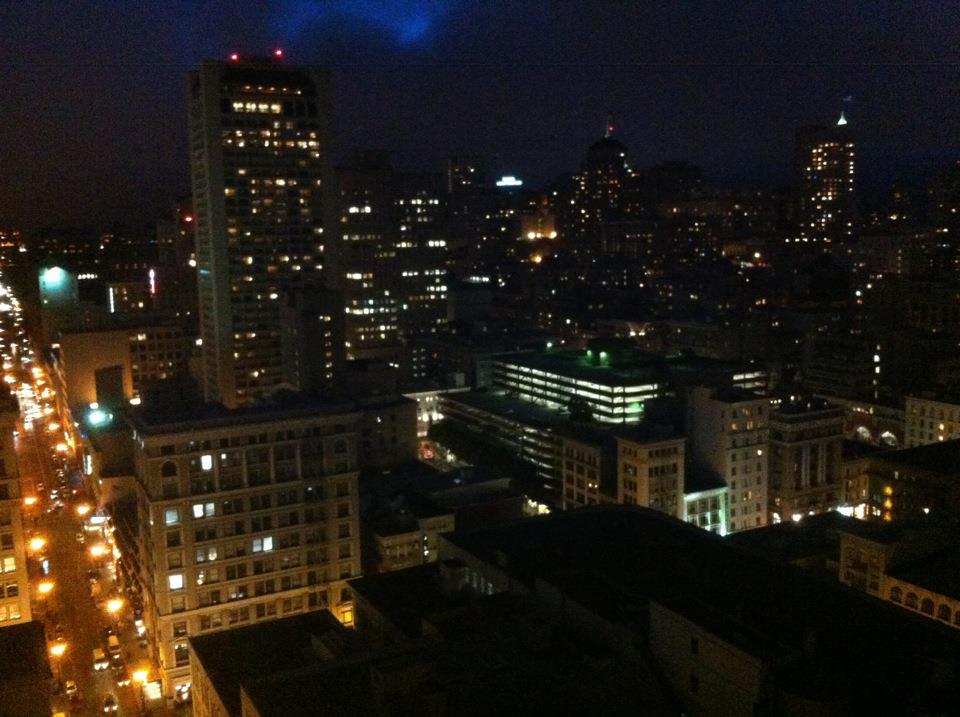
Over the past couple of weeks we've had a chance to do some amazing things! REBBL has been launching and we've been working at launch parties. The most recent being at the Causes head office in San Francisco. The view from their 21st floor space is the best view I've seen in San Francisco and the event left us all pumped about NFS, REBBL and Causes!  The Causes staff are friendly and into the work that NFS and REBBL are doing.


The View from the Causes Office


A Fashion Movement for Change

This past week us lady-fellows went up to San Francisco to a Sustainable Fashion show.  We got all dressed up and headed into the big city. It was a fun experience and I definitely feel at home in San Francisco. The sustainable fashion show featured {r}evolution Apparel who are the makers of the Versalette, and Sew Love Style showing their top and new Tulip Skirt. I felt so trendy being there and seeing a fashion show that is so forward thinking. A couple of the girls really got their networking on and told everyone they could about NFS and exchanged business cards. Myself and another girl just took it all in; the environment, the different people, the venue. We wanted to relish the experience. At the end of the fashion show part of the evening they had the Versalette present for people to try on. I jumped at the chance of trying it on since I want to get one when they are on sale. It was a blast and I will for sure remember it.


Posing with the Versalette


Moments like the fashion show, laughing at the house and enjoying the BSD make it easy to take moments to realize what you are doing, I mean REALLY doing, and appreciate it. It's easy to take a few steps back and enjoy the atmosphere.

My goal for  this week is to take moments in the middle of the day and while taking a sip of water, waiting for an email to load, or walking to or from work, is to take that brief moment, that moment that could be as easily fleeting as a quick ocean breeze while going for a jog, and acknowledge where I am, what I am doing, and really enjoy it.

When you think about it, we really are working to end modern-day slavery. We've been selected from over 30 applicants to come to Half Moon Bay and work with those who are already devoting their life to seeing justice prevail and, for me, to see Love overcome. We are small but are part of the bigger picture. The first part of my day, aside from checking my personal @nfs email account is checking the general email account. While at times, it can seem annoying to be the person that needs to respond to all these random emails, and when you're tired and it's been cloudy and cold for a week it can be exhaustive.  However, looking through those emails is one of the biggest sources of inspiration in my day. The emails from people that read along the lines of 'How can I get involved?', 'What can I do to help?", 'How can I join the movement to end slavery in our time?' get me SO pumped! People are encouraged by the work we do. People care.  People want to be involved. People are feeling called to be involved. If moments like that can't make me enjoy what I am doing  here, nothing will. That one of the many reasons I am so happy to be here.

The more people that know slavery exist today, the more people will a stand against it. The more people who gain knowledge of slavery in supply chains and how they are part of it due to their consumerism, the easier it will be for them to make smart choices. The more people out there making informed decisions, the more businesses and companies will change their ways.  The less demand, the less slavery. All of this results in more people like you and me working to change the cycle and lives of those at risk and provide them them with sustainable new future options!

Those moments sipping my water, waiting for an email to load, walking to or from work, those moments will be spent this week full of gratitude to be here, thankfulness for the opportunity, encouragement from the blessings in my life allowing me to be here, and enjoyment, soaking in every moment.